Floral Eagle Embroidery Design
A Designer’s First Look: Bold, Balanced, and Unmistakably Alive
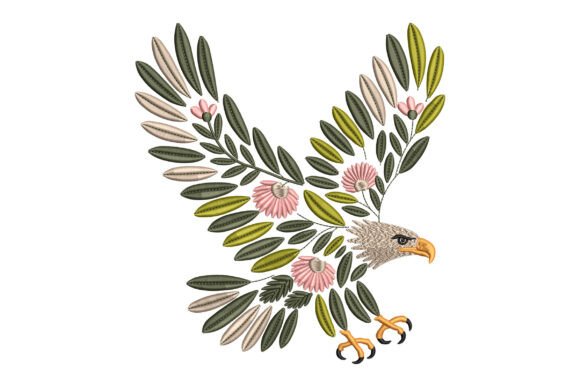
When I opened the Floral Eagle Embroidery Design file for the first time, what struck me wasn’t just the scale—it was the intention. This isn’t a generic eagle silhouette with a few floral flourishes tacked on. It’s a cohesive composition where feather texture meets petal softness, and sharp beak lines anchor swirling vine motifs. The 4.01″ × 3.99″ size feels purpose-built for center-chest placement on a medium-weight sweatshirt or a structured tote bag—large enough to read clearly at arm’s length, but not so oversized that it overwhelms the garment. As someone who regularly selects machine embroidery designs for client work and my own craft business, I immediately pictured it stitched onto a natural linen apron for a local botanical café—where wildlife reverence meets handmade warmth.
Where It Shines: Real Projects, Real Impact
The Floral Eagle Embroidery Design excels in projects that balance artistry with wearability. On a heavyweight cotton tote? Yes—its 20,195 stitches distribute well across dense fill and satin-stitched eagle contours, giving dimension without excessive bulk. On a baby onesie? Proceed with caution—but on a quilted nursery pillow cover or a framed hoop wall hanging? Absolutely. Its visual weight makes it ideal for boutique merchandise: think limited-run tea towels for an indie gift shop, or embroidered patches sewn onto denim jackets for a small shop’s holiday collection. As an Etsy seller, I’d list this as both a digital embroidery file and a finished product option—its thematic clarity (birds + botanicals) appeals directly to nature-minded buyers, and its boldness translates well in printable mockups used for social media listings.
Why It Builds Trust—and Sales
Customers don’t just buy embroidery—they buy confidence in craftsmanship. When you use the Floral Eagle Embroidery Design on a custom apparel order, its clean outlines and intentional negative space signal attention to detail. No muddy corners, no over-stitched petals crowding the eagle’s eye—just balanced stitch density that reads as professional, not rushed. That perception lifts perceived value: a $48 embroidered sweatshirt feels justified when the design holds up under close inspection. For personalized gifts—say, a graduation present for a biology major—the motif carries meaning without being literal. It says “wild spirit,” not “clipart.” That resonance builds repeat engagement, especially for creative entrepreneurs curating a consistent brand voice across products.
Where to Pause—and Test First
This isn’t a one-size-fits-all embroidery file. Its detail demands thoughtful execution. On thin or stretchy fabric—like lightweight rayon for a summer blouse—I’d add cutaway stabilizer beneath *and* topping to prevent puckering around the eagle’s wingtips. On dark fabric, test thread colors: some floral elements may vanish if you default to light pastels without adjusting contrast. And while the 4″ size works cleanly in most 5″ hoops, avoid cramming it into a 4″ hoop without checking clearance—those outer vines need breathing room. Curved surfaces like caps require re-hooping mid-stitch or digitized cap versions (not included here), so treat this as a flat-goods design unless you’re prepared to adjust manually.
Small Details, Big Consequences
Zoom in on the eagle’s talons or the innermost flower centers: these are where stitching fidelity matters most. A low-density fill stitch there could look sparse; a high-density satin stitch might cause stiffness. I always run a test on scrap fabric matching my final project’s weight and weave—especially before committing to a client’s heirloom baby blanket or wedding gift. Also, check how the design renders in grayscale mockups. If the floral layers lose distinction without color cues, consider simplifying thread choices for monochrome batches. And remember: this is a Birds category design, but its strength lies in cross-category appeal—don’t limit it to aviary-themed shops. Pair it with earth-toned apparel, rustic home goods, or even minimalist stationery mockups for unexpected versatility.
Designer Notes You’ll Actually Use
- Always test the Floral Eagle Embroidery Design on scrap fabric matching your final project’s texture, weight, and stretch.
- Review stitch density visually—not just numerically—to anticipate stiffness or sheerness in delicate areas.
- Confirm hoop size compatibility before hooping; those outer floral tendrils need margin.
- Inspect small details (eyes, stamen, feather barbs) at 200% zoom in your embroidery software.
- Try black-and-white and high-contrast fabric mockups to assess legibility and balance.
- Use appropriate stabilizer: cutaway for knits, tear-away for stable wovens, topping for napped fabrics.
- Verify licensing terms before selling finished products or bundling the embroidery file with other design assets.
- For commercial embroidery, confirm whether the design scales cleanly to the 5.01″ × 4.99″ size—if you plan to offer larger options to clients.
Final Thought: A Design That Earns Its Place
The Floral Eagle Embroidery Design doesn’t shout. It commands—quietly, confidently, with rooted detail. It’s the kind of embroidery file I keep in my “go-to statement” folder: not for every project, but for the ones where authenticity, craftsmanship, and visual storytelling matter most. Whether you’re stitching a one-of-a-kind personalized gift, building inventory for your craft business, or selecting digital embroidery files to sell alongside your own patterns, this design earns its space by delivering clarity, character, and quiet authority. Just give it the thoughtful setup it deserves—and let the eagle take flight.