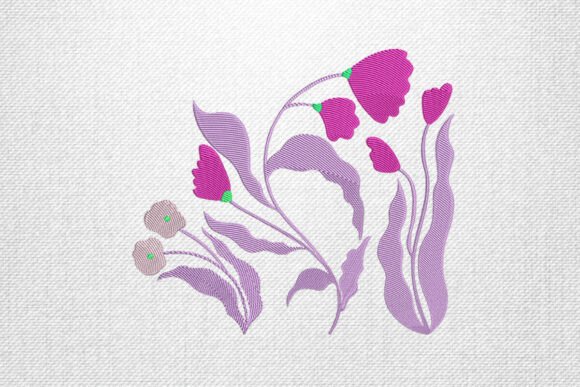
Elegant Floral Bloom Embroidery Design
First Impressions: Grace, Not Gimmick
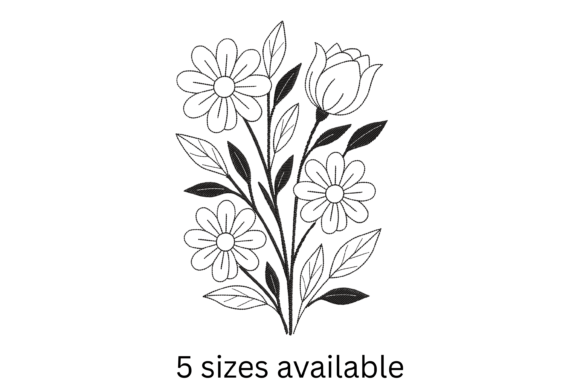
Opening the Elegant Floral Bloom Embroidery Design file feels like unfolding a pressed botanical sketch—delicate but intentional. The composition leans into soft asymmetry: a central bloom with gently unfurling petals, flanked by slender stems and organic leaf forms that curve outward rather than rigidly upward. There’s no forced symmetry or over-engineered precision—just quiet confidence in line and rhythm. This isn’t a “busy” floral. It breathes. That matters when you’re stitching for real people who’ll hold, wear, or gift the finished product.
A Real Project Moment: Stitching It on a Linen Tote Bag
Last week, I used Elegant Floral Bloom Embroidery Design on a natural linen tote for a local boutique’s spring collection. We placed it low on the front panel—not centered, but slightly off-kilter, echoing how wildflowers lean toward light. The result? Instant warmth. Customers paused at the rack. One said, “It looks like it grew there.” That’s the goal: embroidery that enhances, not interrupts, the fabric’s character. The design’s gentle scale (neither too dainty nor overly dominant) made it work beautifully on the textured weave—no sinking, no puckering—because the stitch density felt considered, not compressed.
Where It Shines—and Where It Asks for Thought
Elegant Floral Bloom Embroidery Design excels in projects where subtlety reads as sophistication:
- Tote bags & pillow covers: Its open layout avoids visual weight, letting fabric texture show through between stems and petals.
- Aprons & tea towels: The floral motif feels functional, not fussy—like something you’d actually reach for while baking or gardening.
- Sweatshirts & lightweight jackets: On medium-weight knits, the satin stitch petals hold shape without stiffness; fill stitches are breathable, not quilted.
- Personalized gifts: Paired with a small monogram or date in clean running stitch nearby, it elevates baby onesies or wedding handkerchiefs without competing.
But it’s not universally effortless. Use caution with:
- Thin or highly stretchy fabrics—like rayon challis or lightweight jersey—without proper cutaway stabilizer. Delicate stems can distort if the base layer shifts.
- Curved surfaces like caps or baby beanies—this design wasn’t built for tight radius hooping. Test placement on a mock cap first; consider simplifying outer leaves if needed.
- Dark or heavily textured backgrounds—the green and purple thread tones rely on contrast. On charcoal corduroy or black terry, check that leaf veins and petal edges remain legible after stitching.
- Small hoop sizes (under 4x4 inches)—while scalable, reducing it too far risks losing the graceful flow of the stems. Keep it above 3.5" wide for clarity.
What It Does for Your Craft Business
If you’re an Etsy seller or small shop owner, Elegant Floral Bloom Embroidery Design quietly strengthens your brand voice. It doesn’t scream “handmade!”—it whispers “thoughtfully made.” That distinction builds trust. Buyers scrolling past dozens of floral designs pause here because it feels curated, not algorithm-fed. For digital product sellers, this design works well in printable mockups: its balanced negative space photographs cleanly on flat-lay shots, and its color story (pink, purple, green) translates clearly across screen and print previews.
As a commercial embroidery designer, I’ve seen how one strong single-flower design can anchor an entire seasonal line. Pair Elegant Floral Bloom Embroidery Design with minimalist script fonts for custom apparel, or use it solo as an embroidered patch for denim jackets—it scales well into physical product assets without losing identity.
Practical Designer Notes You’ll Actually Use
Before stitching your first client piece or listing on Etsy:
- Always test on scrap fabric matching your final garment’s weight and stretch—especially if using it on baby clothes or holiday gifts meant for frequent washing.
- Review thread colors in natural light. Those soft pinks and lavenders can mute on certain whites or creams—try a swatch under window light before committing.
- Inspect small details in your embroidery software: Are petal tips sharp? Do leaf stems taper cleanly? If corners look jagged or stitch jumps appear, adjust pull compensation—not just resize.
- Check licensing terms carefully. Since this is marketed as a machine embroidery design for tote bags, pillow covers, and apparel, confirm whether resale of finished items is permitted—and whether digital redistribution (e.g., bundling in a craft bundle) is allowed.
- Use appropriate stabilizer. For woven fabrics like cotton or linen: medium-weight tear-away. For knits: cutaway + topping. Skipping this step will compromise the delicate balance this design relies on.
- Test black-and-white mockups. If you offer customization options, seeing how the design reads in grayscale helps anticipate buyer questions about contrast on dark garments.
Final Thought: A Design That Ages Well
Some embroidery files feel trendy the day you download them—and dated six months later. Elegant Floral Bloom Embroidery Design avoids that trap. Its strength lies in restraint: no excessive fill, no hyper-saturated gradients, no forced novelty. It’s a reliable tool—not a flash-in-the-pan asset. Whether you’re embroidering a one-of-a-kind gift or building a cohesive line of handmade products, this design supports intention over impulse. It reminds us that elegance in embroidery isn’t about complexity. It’s about clarity, calm, and knowing exactly where to place the needle—and when to leave space for the fabric, the wearer, and the moment to speak for themselves.