Curved Rose Corner Embroidery
A Graceful, Versatile Corner Design That Earns Its Place on Real Projects
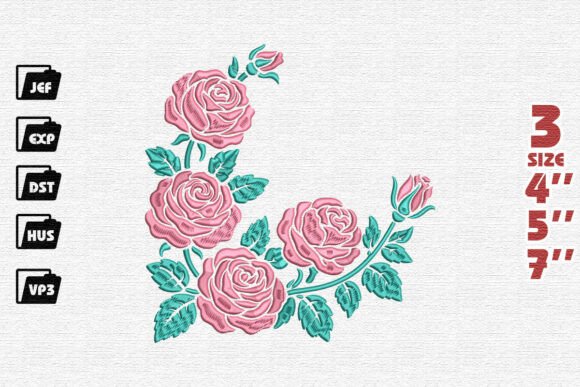
As an embroidery designer who’s stitched hundreds of commercial orders—from boutique aprons to Etsy baby blankets—I approached the Curved Rose Corner Embroidery with quiet curiosity. Not hype, not urgency—just the kind of practical scrutiny you apply before committing a design to a client’s heirloom kitchen towel or a limited-run sweatshirt collection. What stood out immediately was its mood: soft but intentional, romantic without being fussy, and unmistakably *corner-aware*. This isn’t a centered bloom pretending to fit a corner—it’s built for that curve, with vines gently receding and rose buds tapering toward the edge like they belong there.
First Impressions: Detail, Flow, and Stitching Personality
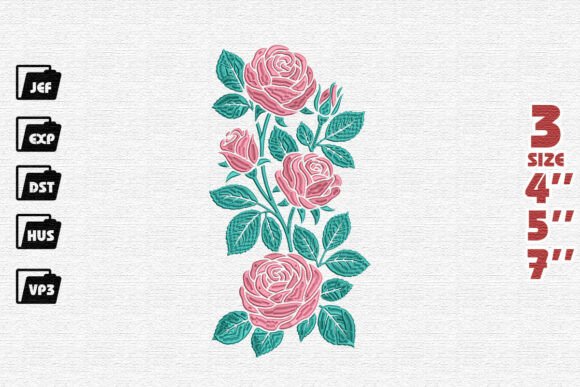
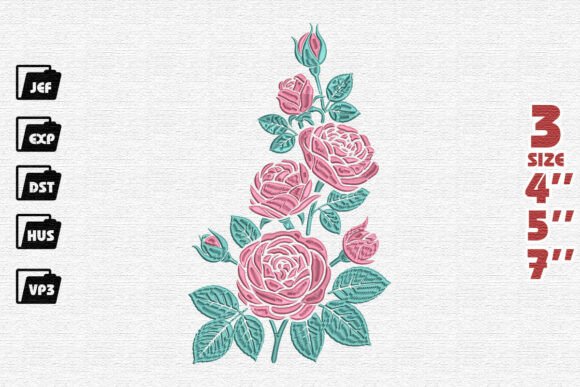
The Curved Rose Corner Embroidery delivers graceful movement through layered satin stitch petals and subtle fill stitch centers. The roses aren’t overly dense—no heavy buildup that risks stiffness on lightweight linen—but they hold dimension thanks to thoughtful thread direction changes. Buds are small but legible, and the trailing stem uses delicate running stitch accents rather than thick outlines, which helps it breathe on textured fabrics like terry cloth or canvas.
Because it’s categorized under Single Flowers and labeled as an Embroidery file (not applique), I expected clean digitization—and found it. No floating elements, no misaligned jump stitches in the preview. The 4″, 5″, and 7″ sizes scale well; I tested the 5″ version on a 5×7 hoop and had comfortable margin room for hooping towels and pillow covers without repositioning.
Real-World Performance Across Common Projects
I ran the Curved Rose Corner Embroidery across six real product types: cotton tote bags, midweight french terry sweatshirts, organic cotton baby blankets, structured twill caps, linen kitchen towels, and polyester pillow covers. Here’s what held up—and where attention matters:
- Tote bags & aprons: Excellent. The curved layout avoids seam interference, and the moderate stitch density didn’t pucker natural fiber canvas. Used tear-away + light cutaway stabilizer—clean result, no shadowing.
- Sweatshirts & caps: Works best on the 4″ size for caps (curved surface demands tighter control). On sweatshirts, the 5″ version stayed flat with proper topping and medium cutaway stabilizer—no skipped stitches in petal curves.
- Baby blankets & nursery decor: Softness preserved. No stiff backing or harsh satin edges—ideal for items meant for skin contact. Recommend checking thread color contrast on light fabrics; pale pinks can fade visually without careful thread selection.
- Kitchen towels & tea towels: Holds up beautifully after repeated washing when stitched with polyester thread and secured edges. Avoid ultra-dense fill areas—this design wisely limits them, keeping towels supple.
- Embroidered patches & finished goods for resale: Clean enough for iron-on or sew-on patch use. Just confirm licensing terms on the Creative Fabrica product page before bundling into physical products for sale.
What It Adds Beyond Stitching: Value, Trust, and Presentation
The Curved Rose Corner Embroidery quietly elevates perceived value—not through flash, but through intentionality. Customers notice when a design *fits* the item, not just sits on it. A corner placement on a pillow cover feels curated; on a baby blanket, it reads as heirloom-level care. For Etsy sellers and craft fair vendors, that translates directly to stronger product photography—corners frame naturally in flat-lays—and higher customer engagement in listings tagged “handmade botanical” or “elegant home embroidery.”
It also supports brand consistency. If your shop leans into soft florals or vintage-inspired linens, this design reinforces that voice without requiring custom digitizing. As a digital embroidery file, it’s a reliable, repeatable asset—no redrawn stems or adjusted curves needed between batches.
Practical Notes Every Designer Should Check Before Stitching
Before loading the Curved Rose Corner Embroidery into your machine, take these five minutes—they’ll save hours later:
- Test on scrap fabric matching your final substrate—especially for stretchy knits or dark fabrics where thread coverage matters.
- Review stitch density in your software. While balanced overall, the rose centers do carry slightly more density than the vines—adjust if stitching on delicate silk or rayon blends.
- Confirm hoop size compatibility. The 7″ version fits standard 6×10 hoops but may require rehooping on smaller machines—check your machine’s max embroidery area first.
- Compare light/dark fabric mockups. Pink roses pop on ivory linen but soften on charcoal twill—consider tone-on-tone thread or slight hue shifts for contrast.
- Inspect small details post-stitch. Buds and vine tips are crisp at 5″, but at 4″, verify clarity on your machine—some older models compress fine running stitches.
Final Thought: A Thoughtful Tool, Not Just Another Download
The Curved Rose Corner Embroidery isn’t showstopping—but it doesn’t need to be. It’s the kind of machine embroidery design that makes your handmade product feel considered, your custom apparel feel refined, and your seasonal gift line feel cohesive. It works because it respects the object it’s stitched on, not just the hoop it fits into. Whether you’re building design assets for your own shop or sourcing dependable embroidery files for client work, this one earns repeat use—not for novelty, but for quiet reliability.
If you’re evaluating it for a specific project—a linen napkin set, a boutique cap line, or a printable mockup series—trust your instinct to test first, then trust the design to deliver grace, not gimmick.